Commercial Damage Restoration & Repair Serving Charleston, SC
Charleston SC Commercial Damage Restoration
Commercial Water, Fire and Mold Damage Restoration in Charleston, South Carolina
Cotton Global Disaster Solutions has been responding to commercial property damage events since 1996. We serve Charleston businesses around the clock, providing commercial damage restoration services for water, fire, mold and storm events at facilities across the Low-country. From hotel properties on the Peninsula to industrial operations in North Charleston, our team arrives with commercial-scale equipment and the coordination needed to limit your downtime and return your property to pre-loss condition. With cutting-edge technology and comprehensive restoration solutions, you can rest assured your Charleston facility will receive professional service at any time of day or night, 24/7.
Commercial Water Damage Restoration in Charleston, SC
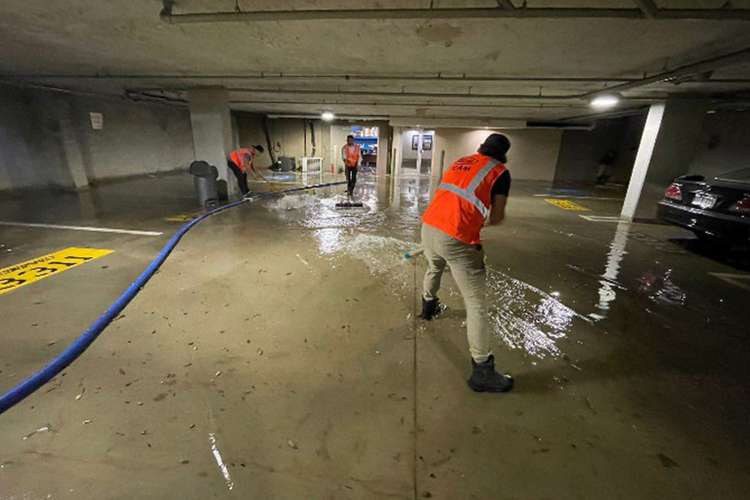
Charleston is one of the most flood-exposed commercial markets on the East Coast and that exposure shapes how we approach every water damage response in this area. Tidal flooding alone now affects parts of the peninsula dozens of times per year, a number that has increased steadily over the past decade. Beyond coastal events, internal failures, including burst pipes, HVAC condensate overflows and fire suppression discharges, generate a significant share of the commercial water losses our team responds to year-round.
When we respond to a Charleston, SC commercial water damage restoration call, we extract standing water, map moisture throughout the structure using calibrated instruments and begin active drying with commercial-grade equipment immediately. We document every condition throughout the process to support your insurance claim and provide a full moisture log at project close.
Water Extraction: Rapid removal of standing water to stop damage from spreading into structural materials.
Drying & Dehumidification: Industrial drying equipment calibrated for the moisture load and building type.
Content & Document Drying: Recovery of furnishings, equipment and business-critical records.
Moisture Mapping: Comprehensive assessment to confirm all affected areas are identified and fully dried before restoration closes out.
Commercial Fire Damage Restoration in Charleston, SC
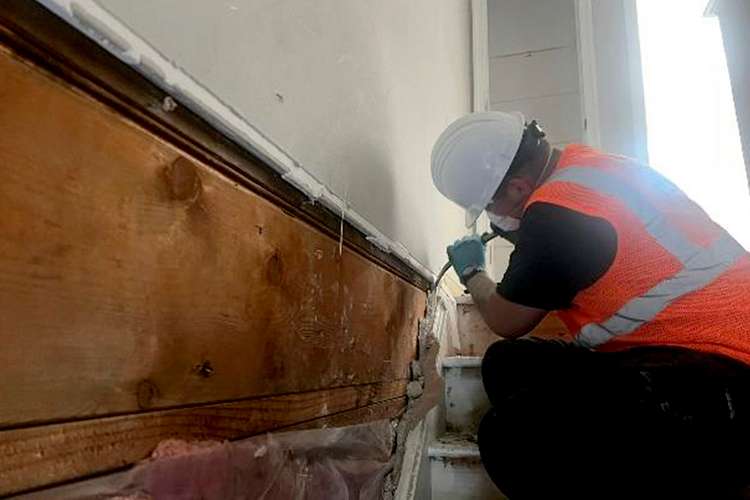
Charleston's Peninsula has a high concentration of historic wood-frame commercial buildings, and that construction profile creates a distinct fire damage challenge. Smoke and soot penetrate unfinished wood framing and original plaster more deeply than modern building materials, and older mechanical systems can carry smoke residue into areas of the building well removed from the fire's origin. Odor compounds settle into stored inventory and porous finishes quickly, creating air quality issues that extend the recovery timeline if treatment is delayed.
Our commercial fire damage restoration process covers the full scope of the loss. We assess secondary damage beyond the fire's origin, coordinate directly with your insurance adjuster and handle content cleaning and document recovery as part of the same engagement. Smoke odor is treated at the material level, not masked at the surface.
Soot & Smoke Cleanup: Systematic removal of soot residue and smoke deposits from all affected surfaces and building materials.
Odor Removal & Deodorization: Eliminating smoke odor from building materials and shared spaces so the property is safe and fully habitable.
Content Cleaning & Restoration: Professional cleaning and recovery of FF&E, fixtures and equipment to reduce replacement costs and shorten the overall restoration timeline.
Document & Data Recovery: Recovery of business-critical records and data using freeze-drying and professional cleaning to limit permanent loss.
Reconstruction Services: Returning your commercial property to pre-loss condition through structural repairs, interior build-out, carpentry, electrical, mechanical, plumbing and complete exterior envelope work.
Commercial Mold Damage Restoration in Charleston, SC
Charleston's average relative humidity sits above 70% for most of the calendar year. That baseline environment compresses the time between a moisture intrusion and active mold development. On wet building materials under these conditions, mold can begin appearing within 24 to 48 hours of a water event. In an occupied commercial building, this creates a health concern for building occupants and a liability exposure for property owners and facility managers that needs to be addressed immediately.
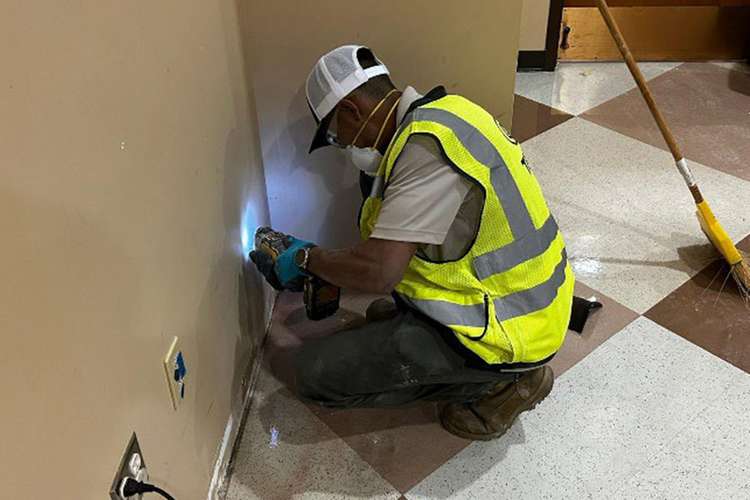
Our mold remediation process begins with containment to prevent spores from spreading beyond the affected area. We remove mold-impacted materials, treat affected surfaces, restore indoor air quality to a measurable and verifiable level and provide complete project documentation at close. Charleston's Peninsula carries one of the highest concentrations of commercially leased space in South Carolina, and that documentation gives property owners and tenants a clear, defensible record for insurance claims, lease negotiations and future property transactions.
Mold Containment & Removal
Air Filtration & Scrubbing
Surface Treatment
Post-Remediation Verification
Additional Commercial Damage Services in Charleston, SC
Damage events in the Low-country often involve multiple failure points at once. A hurricane can produce wind damage, roof failures and flooding in the same event, requiring recovery coordination across service lines from a single point of contact. Beyond our core restoration services, we provide the following for commercial properties throughout the Charleston area:
The Cotton Difference for Charleston
Cotton GDS has been providing commercial damage restoration and repair since 1996 and we bring that depth of experience to every project in the Charleston market. Charleston's commercial sector includes a concentrated hospitality corridor along the Peninsula, active healthcare systems, one of the busiest container ports on the East Coast and a growing industrial base in North Charleston. These are properties where a slow or disorganized restoration response carries real operational and financial consequences that go beyond the cost of physical repairs.
24/7 Situational Awareness: Our Business Intelligence Center monitors Atlantic weather systems tracking toward coastal South Carolina, allowing us to pre-position equipment and personnel before a storm makes landfall so we can begin response the moment damage occurs.
Pre-Loaded Fleet for Immediate Dispatch: Equipment is staged and ready to deploy throughout Charleston and the surrounding Low-country, reducing the time between the damage event and the start of active mitigation.
Trusted Partner for Charleston Businesses: With 30 years of commercial restoration experience, we have the track record and resources that Charleston facility managers and business owners can depend on when a loss occurs.
Adherence to OSHA Standards: We operate in full compliance with all local, state and federal regulations on every project, regardless of scope or complexity.
Commercial-Grade Equipment: We deploy industrial-scale extraction, drying and remediation equipment built for commercial facilities, not residential tools repurposed for a larger job.
Contact Cotton GDS for commercial damage restoration and repair in Charleston, SC and put our years of experience to work for your property.
Cotton’s Service Areas Near Charleston, South Carolina:
Downtown Charleston
Historic District
French Quarter
South of Broad
West Ashley
James Island
Mount Pleasant
North Charleston
Daniel Island
Sullivan's Island
Folly Beach
Isle of Palms
Johns Island
Summerville
Goose Creek
Frequently Asked Questions About Commercial Damage Restoration in Charleston, SC
How does tidal flooding affect the restoration process differently than freshwater flooding?
Tidal flooding carries saltwater and organic sediment into commercial spaces. Saltwater is corrosive to structural steel, electrical systems and HVAC components in ways that freshwater is not and it leaves behind chloride deposits that continue degrading materials after the water has been removed. Applying standard freshwater restoration protocols to a saltwater intrusion leaves that corrosive residue in place and leads to ongoing material failure. Our team assesses tidal losses with those material differences in mind and adjusts the treatment and documentation process accordingly.
How long does commercial water damage restoration take for a large facility?
The timeline depends on the size of the affected area, the building materials involved and how quickly mitigation begins after the loss. Drying a large commercial facility generally takes several days to a week once extraction is complete, with structural repairs and finish work extending the project from there. Every hour of delay before mitigation begins reduces the window for saving affected material and extends the total restoration timeline. Early response is consistently the most effective way to limit both cost and operational interruption.
What should a facility manager do in the first hour after discovering water damage?
Stop the source if it is safe to do so, then contact a commercial restoration contractor immediately. Standard shop vacuums and residential fans are not built for the extraction volumes or drying rates that a commercial facility requires. Do not assume that a limited visible intrusion means the damage is confined to what you can see. Water travels through walls, subfloors and ceiling systems quickly and the actual scope of damage is almost always larger than what is apparent on the surface. Contacting Cotton GDS at the first sign of damage gives our team the fastest possible response window.
Does commercial mold remediation require a commercial building to close temporarily?
Not always. When the affected area can be isolated with proper containment without impacting occupied portions of the building, we sequence the work to allow operations to continue outside the remediation zone. The size of the contaminated area, the building layout and the scope of work all factor into that determination. We assess the situation at the start of every project and develop a plan with the goal of keeping your operational interruption as brief as possible.
Does Cotton GDS work directly with commercial property insurance carriers?
Yes. We document conditions from the first day on-site, including moisture readings, photographs and material inventories and we communicate directly with your insurance adjuster throughout the project. Commercial property claims carry more complex documentation requirements than residential claims and our team is experienced with what adjusters and carriers need to process those claims efficiently.
Do Charleston's historic district regulations affect the scope of restoration work?
Yes. Charleston's Board of Architectural Review oversees exterior work on properties within the city's designated historic districts and certain repair methods or material substitutions that are standard elsewhere may not meet local guidelines. We factor these requirements into project planning from the start so that restoration work does not create additional compliance exposure for the property owner.
What types of secondary damage does a commercial fire cause beyond the burn area?
Smoke and soot are the most consistent sources of secondary damage in a commercial fire loss. Both travel through HVAC ductwork and deposit on surfaces throughout the building, including areas that had no contact with flames. Smoke odor also penetrates porous building materials and any stored inventory left in the facility. If these secondary effects are not addressed with the correct equipment and techniques, they produce persistent air quality problems well after the fire is out. We address secondary smoke and soot damage as part of the standard scope on every commercial fire damage restoration project in Charleston, SC.