Commercial Disaster Restoration in New Orleans, Louisiana
Commercial Damage Restoration and Repair in New Orleans, LA
Commercial Water, Fire and Mold Damage Restoration in New Orleans, Louisiana
- Office Location: 125 Mallard, Suite A, St. Rose, LA 70087
- Contact: 877.900.0493
- Location: 18 minutes from Caesars Superdome, 25 minutes from The National WWII Museum and 30 minutes from Jackson Square
Cotton Global Disaster Solutions has been responding to commercial property damage events since 1996. We serve New Orleans businesses around the clock, providing New Orleans, LA commercial damage restoration and repair services for water, fire, mold and storm losses across Southeast Louisiana. From hospitality properties in the French Quarter and Central Business District to petrochemical and industrial operations along the Mississippi River corridor and healthcare facilities throughout the metro, our team is available 24/7 with commercial-scale equipment and the coordination needed to limit your downtime and return your property to pre-loss condition. With state-of-the-art technology and turnkey restoration solutions, you can rest assured your New Orleans facility will receive professional service whenever you need it.
Commercial Water Damage Restoration in New Orleans, LA
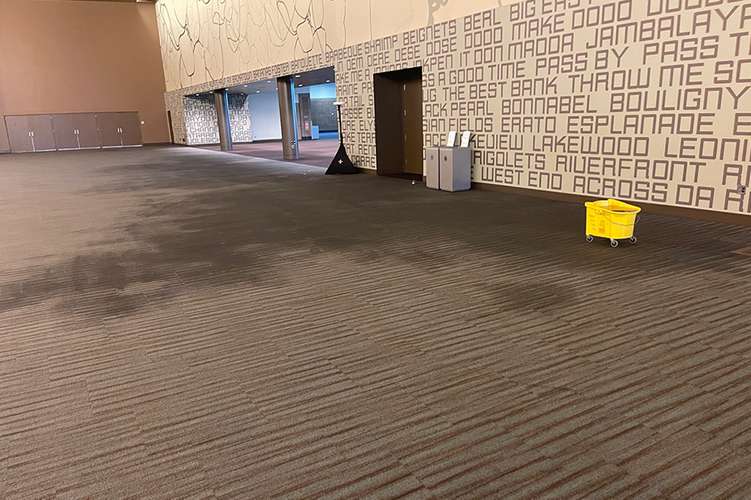
New Orleans occupies one of the most challenging geographic positions of any major commercial market in the country. Much of the city sits below sea level, held in place by a network of levees, floodwalls and pumping stations that form the most extensive flood control infrastructure in the United States. That infrastructure was strengthened significantly after Hurricane Katrina in 2005, and it was tested again on August 29, 2021, when Hurricane Ida made landfall as a Category 4 storm exactly 16 years after Katrina. Ida's storm surge and sustained winds produced significant commercial losses across the New Orleans metro and across Southeast Louisiana's coastal parishes, demonstrating that even a rebuilt levee system does not eliminate flood exposure for commercial properties throughout the region. Beyond named storm events, New Orleans's drainage infrastructure can still be overwhelmed during intense summer rainfall without any named storm involved. In August 2017, heavy rainfall across the metro overwhelmed pump capacity and flooded commercial properties in Lakeview, Mid-City and the Central Business District within hours, affecting businesses with no prior storm loss history. Commercial water damage restoration and commercial water mitigation in New Orleans must account for the full range of flood sources: storm surge from named storms, rainfall-driven drainage failure and groundwater intrusion driven by the city's below-sea-level position.
When we respond to a New Orleans, LA commercial water damage restoration or commercial water mitigation call, we extract standing water, map moisture throughout the structure using calibrated instruments and begin active drying with industrial equipment immediately. We document every condition throughout the process to support your insurance claim and deliver a full moisture log at project close.
- Water Extraction: Rapid removal of standing water to stop damage from spreading into structural materials.
- Drying & Dehumidification: Industrial drying equipment calibrated for the moisture load and building type.
- Content & Document Drying: Recovery of furnishings, equipment and business-critical records.
- Moisture Mapping: Comprehensive assessment to confirm all affected areas are identified and fully dried before restoration closes out.
Commercial Mold Damage Restoration in New Orleans, LA
New Orleans regularly records some of the highest average relative humidity levels of any major city in the United States, consistently above 75% year-round and climbing higher during the summer months. That baseline moisture environment means the conditions mold requires exist in New Orleans commercial buildings before any water intrusion event occurs. A single HVAC condensate overflow, a minor roof penetration or any residual moisture from a flooding event that was not fully dried can initiate mold growth within 24 hours in New Orleans's climate, faster than the window commonly cited in less humid markets. The city's below-sea-level position adds a separate mold exposure risk that does not exist in other markets. Groundwater pressure from the surrounding soil can force moisture into below-grade commercial spaces and slab foundations independent of any surface flooding event, creating persistent moisture conditions that support mold development without any visible water source. Hurricane Ida's 2021 losses created a secondary mold wave across the metro in the months that followed, as properties where water losses were not fully mitigated or where moisture mapping missed affected cavities developed mold growth inside wall assemblies and below finished surfaces well after the floodwater had receded.
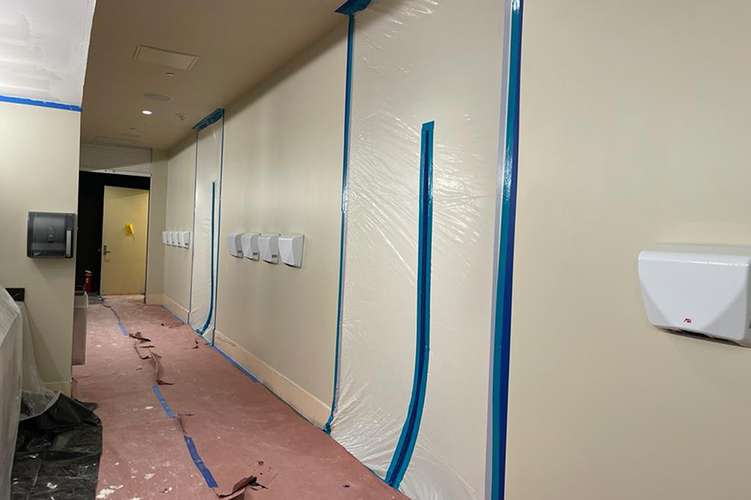
Our New Orleans, LA commercial mold damage restoration process begins with containment to prevent spore migration beyond the affected area. We remove mold-impacted materials, treat affected surfaces, restore indoor air quality to a measurable and verifiable level and provide complete project documentation at close. For commercial properties in New Orleans operating in the hospitality, healthcare and industrial sectors, that documentation provides a clear and defensible record for insurance claims, regulatory compliance requirements and future property transactions.
- Mold Containment & Removal
- Air Filtration & Scrubbing
- Surface Treatment
- Post-Remediation Verification
Commercial Storm Damage Restoration New Orleans, LA
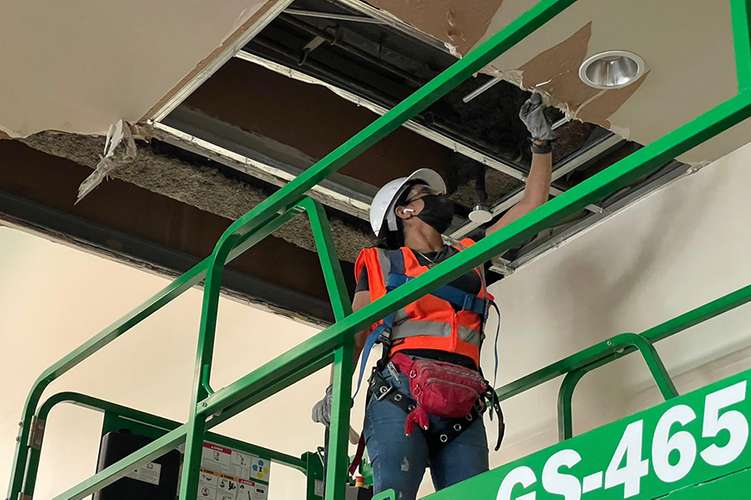
If the forecast calls for severe storms, know that Cotton GDS is already on standby. Crews will immediately protect your property with temporary boarding and roofing solutions that keep wind and water out. Once secured, experts will ensure your property is cleaned and restored as quickly as possible. Explore our storm damage restoration services:
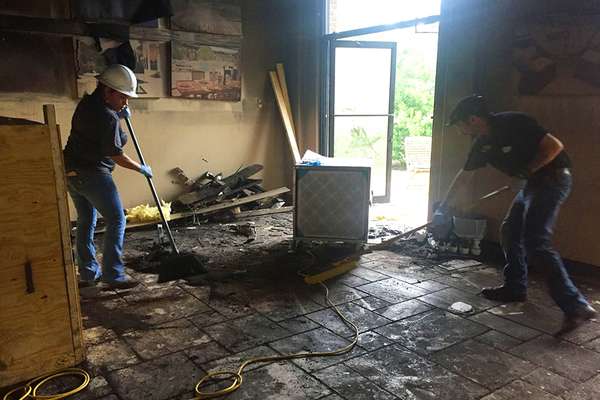
Commercial Fire Damage Restoration in New Orleans, LA
New Orleans's commercial building inventory spans two distinct risk profiles that shape how fire damage restoration is approached in this market. The French Quarter, the Garden District and the Warehouse District contain a high concentration of 19th and early 20th century wood-frame and masonry construction where smoke and soot travel through uninsulated wall cavities and original ductwork into adjacent spaces quickly after a fire event. In the French Quarter specifically, the density of commercial properties and the shared-wall construction common in that historic district means a fire in one building can produce smoke migration into neighboring structures without any direct fire contact. The Mississippi River corridor running through the New Orleans metro and into the surrounding parishes is home to one of the largest concentrations of petrochemical, refining and industrial operations in the country, and fire events in that environment produce chemical smoke compounds that require specialized assessment and treatment protocols beyond what a standard commercial fire demands.
Our New Orleans, LA commercial fire damage restoration team evaluates the full scope of secondary damage across the entire affected footprint, coordinates directly with your insurance adjuster and manages every phase of recovery under a single engagement.
- Soot & Smoke Cleanup: Systematic removal of soot residue and smoke deposits from all affected surfaces and building materials, including adjacent spaces affected by smoke migration through shared walls and original ductwork in historic French Quarter and Warehouse District properties.
- Odor Removal & Deodorization: We treat smoke odor at the material level across the full affected footprint so the property is safe and fully habitable upon project completion.
- Content Cleaning & Restoration: Professional cleaning and recovery of FF&E, fixtures and equipment to reduce replacement costs and shorten the overall restoration timeline.
- Document & Data Recovery: Recovery of business-critical records and data using freeze-drying and professional cleaning to limit permanent loss wherever possible.
- Reconstruction Services: Comprehensive restoration of structural integrity, including site containment, temporary shoring, full-scale carpentry and complete exterior envelope reconstruction. For properties within New Orleans's historic districts, our team accounts for Louisiana State Historic Preservation Office requirements and local Vieux Carré Commission review obligations from the start of every project.
Additional Commercial Damage Services in New Orleans, LA
Damage events in Southeast Louisiana frequently require recovery across multiple service lines at once. A hurricane can deliver storm surge, wind damage and roof failures simultaneously, and the petrochemical environment along the Mississippi River corridor means certain commercial losses involve environmental response requirements that go beyond standard restoration. Beyond our core New Orleans, LA commercial damage restoration services, we provide the following for commercial properties throughout Southeast Louisiana and the broader Gulf Coast region:
Cotton's Service Areas Near New Orleans, Louisiana
Alexandria
Baker
Baton Rouge
Biloxi
Bossier City
Brandon
Broussard
Central
Clinton
Columbus
Gautier
Greenville
Gretna
Gulfport
Hammond
Hattiesburg
Hernando
Horn Lake
Houma
Jackson
Kenner
Lafayette
Lake Charles
Laurel
Long Beach
Madison
Meridian
Monroe
Natchitoches
New Iberia
New Orleans
Ocean Springs
Olive Branch
Opelousas
Oxford
Pascagoula
Pearl
Pineville
Ridgeland
Ruston
Shreveport
Slidell
Southaven
Starkville
Sulphur
Thibodaux
Tupelo
Vicksburg
Youngsville
Zachary
The Cotton Difference for New Orleans
Cotton GDS operates from a St. Rose office positioned along the Mississippi River corridor between New Orleans and Baton Rouge, placing our team within reach of commercial properties throughout the metro, the surrounding parishes and the industrial operations concentrated along the River Road. New Orleans's commercial sector includes one of the busiest ports in the Western Hemisphere at the Port of New Orleans, a global hospitality and tourism industry anchored by the French Quarter and the Convention Center, major healthcare systems including Ochsner Health and LCMC Health and the significant petrochemical and energy operations that run through St. Charles, Jefferson and St. John the Baptist parishes. These are properties where a slow or disorganized restoration response carries operational and financial consequences that extend well beyond the cost of the physical repairs.
24/7 Situational Awareness: Our Business Intelligence Center monitors Atlantic storm systems and Gulf of Mexico tropical development throughout hurricane season, allowing us to pre-position equipment and personnel before a named storm makes landfall so we can begin response the moment damage occurs rather than mobilizing after the fact.
Pre-Loaded Fleet for Immediate Dispatch: Equipment is staged and ready to deploy throughout New Orleans and the surrounding Southeast Louisiana region, reducing the time between the damage event and the start of active mitigation.
Pre-Positioned for Hurricane Season: We do not wait for a storm to make landfall before activating. When the National Hurricane Center identifies a system with potential to affect Southeast Louisiana, our team begins pre-event logistics so that resources are already in position when commercial property managers need them.
Trusted by New Orleans Businesses: With nearly 30 years of commercial restoration experience and roots along the Gulf Coast, we have the track record and resources that facility managers and property owners across Southeast Louisiana can depend on when a loss occurs.
Adherence to OSHA Standards: We operate in full compliance with all local, state and federal regulations on every project, regardless of scope or complexity.
Commercial-Grade Equipment: We deploy industrial-scale extraction, drying and remediation equipment purpose-built for commercial facilities, not residential tools repurposed for a larger job.
Contact Cotton GDS for New Orleans, LA commercial damage restoration and repair and put our experience to work for your property.
Frequently Asked Questions About Commercial Damage Restoration in New Orleans, LA
How does commercial water mitigation in New Orleans differ from other markets Cotton GDS serves?
New Orleans presents a flood source profile that does not exist in other markets where we operate. Commercial properties here can receive water from storm surge driven by Gulf systems, from rainfall-driven drainage failure when the city's pump system is overwhelmed and from groundwater intrusion driven by the below-sea-level soil pressure that surrounds below-grade building spaces. Each of these sources requires a different initial assessment because the water chemistry, entry point and structural pathway differ significantly. Storm surge and groundwater carry different contaminant loads than rainfall-driven flooding, and the treatment and drying approach we apply reflects those differences. When we respond to a New Orleans commercial water mitigation call, identifying the source and pathway is the first step before extraction begins.
How does Cotton GDS handle commercial storm damage restoration in New Orleans before a hurricane makes landfall?
Our Business Intelligence Center monitors Gulf of Mexico and Atlantic storm systems throughout hurricane season and begins pre-event logistics when a system develops a track that could affect Southeast Louisiana. That means equipment pre-positioning, crew mobilization planning and direct communication with commercial clients in our service area before the storm arrives. When Hurricane Ida made landfall in August 2021, the speed of the post-storm response in the New Orleans metro was directly affected by whether contractors had pre-positioned resources or were mobilizing from outside the region after the fact. We operate on the assumption that waiting until landfall to begin activation adds days to the response timeline that directly extend commercial property losses.
Why is mold remediation more urgent for commercial properties in New Orleans than in other markets?
New Orleans's combination of extreme humidity, a below-sea-level water table and a history of large-scale flooding events creates a mold development window that is shorter than the 24 to 48 hours commonly cited for less humid climates. In the months following Hurricane Ida, commercial properties across the metro that had experienced flooding developed secondary mold growth inside wall assemblies and below finished surfaces even where surface-level drying appeared complete. The groundwater pressure that affects below-grade commercial spaces in New Orleans also creates a persistent moisture source that supports mold development without any flooding event occurring. Our commercial mold remediation process in New Orleans accounts for these additional moisture sources and does not close out a project until post-remediation verification confirms that conditions are dry to a measurable standard rather than just visibly dry.
How does commercial fire damage restoration in the French Quarter differ from standard commercial fire restoration?
The French Quarter's shared-wall construction and original wood-frame buildings create smoke migration pathways that modern commercial buildings do not have. In a standard commercial building, fire suppression systems, compartmentalized construction and modern insulation limit how far smoke can travel beyond the fire's point of origin. In the French Quarter, original wall cavities, historic ductwork and the shared building walls that connect adjacent commercial properties allow smoke and soot to migrate laterally into neighboring structures without any direct fire contact. A fire in a French Quarter restaurant can deposit smoke residue in the retail space next door and the residential unit above before the fire department has finished suppression. We assess the full migration footprint before establishing a restoration scope on every French Quarter fire loss.
Does Cotton GDS serve commercial properties along the Mississippi River industrial corridor from the St. Rose office?
Yes. Our St. Rose office is positioned along the River Road corridor between New Orleans and Baton Rouge, which places us directly adjacent to the concentration of petrochemical, refining and industrial operations that run through St. Charles, Jefferson and St. John the Baptist parishes. These facilities are part of our standard service area and we have the environmental response capabilities and HAZWOPER-trained personnel to respond to losses in that environment. For large-scale industrial events requiring additional resources, we coordinate with Cotton GDS's national network and Cotton Logistics to deploy the full range of environmental response, workforce housing and logistics support alongside restoration services.
Does Cotton GDS coordinate directly with commercial insurance adjusters in Louisiana?
Yes. We document conditions from the first day on-site, including moisture readings, photographs and material inventories, and we communicate directly with your adjuster throughout the project. Louisiana commercial property claims following major hurricane events carry documentation requirements that differ significantly from standard single-cause water damage claims, particularly when a loss involves both storm surge and rainfall-driven flooding under separate policy provisions. The distinction between wind damage, storm surge and flood damage is a frequent source of coverage disputes in Louisiana following named storm events, and thorough documentation from the first day of response is the most important step in navigating those disputes efficiently.
How long does New Orleans, LA commercial damage restoration typically take after a hurricane event?
Timeline depends on the extent of the flooding, the type of structural damage involved and how quickly mitigation began. A contained water loss from a single source in a commercial space can typically be dried and restored within two to three weeks from the start of extraction. A hurricane loss involving storm surge, roof damage and interior flooding across a large commercial facility will extend that timeline considerably, often to several months when structural reconstruction and City of New Orleans or parish permitting are included in the scope. Properties that experienced extended water exposure and developed secondary mold growth face an additional remediation phase before reconstruction can begin. We provide a project-specific timeline at the outset of every engagement based on the actual conditions found during the initial assessment.