Commercial Damage Restoration & Repair in Nashville, TN

Commercial Water, Fire and Mold Damage Restoration in Nashville, Tennessee

  • Office Location: 5162 Hickory Hollow Parkway, Antioch, Tennessee 37013
  • Contact: 877.900.0493
  • Location: 18 minutes from Nashville International Airport, 19 minutes from Nissan Stadium and 22 minutes from Grand Ole Opry

Cotton Global Disaster Solutions has been responding to commercial property damage events since 1996. We serve Nashville businesses around the clock, providing Nashville, TN commercial damage restoration and repair services for water, fire, mold and storm losses across Middle Tennessee. From healthcare campuses and corporate headquarters in the Midtown and Brentwood corridors to hospitality and entertainment properties along Lower Broadway and the industrial operations extending across Davidson County, our team is available 24/7 with commercial-scale equipment and the coordination needed to limit your downtime and return your property to pre-loss condition. With state-of-the-art technology and turnkey restoration solutions, you can rest assured your Nashville facility will receive professional service whenever you need it.

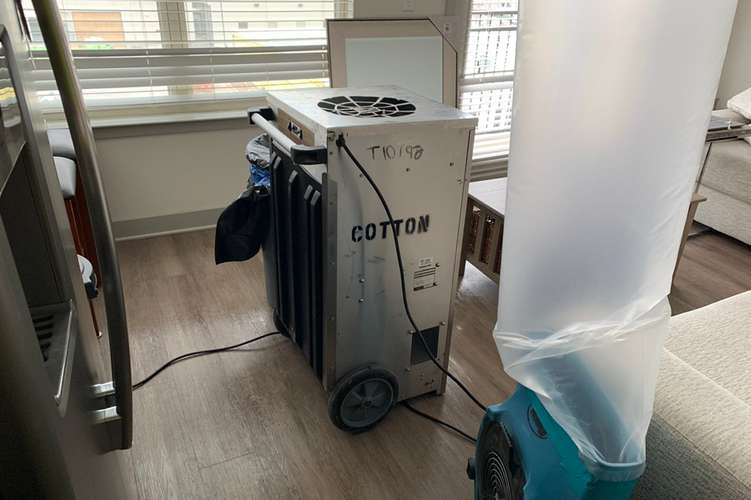
Cotton GDS repairing water damage  in Nashville, TN

Commercial Water Damage Restoration in Nashville, TN

Nashville's commercial water damage risk profile is defined by two events that every facility manager in Middle Tennessee knows by name. The first is the May 2010 flood. Two successive rounds of severe thunderstorms delivered more than 13 inches of rainfall across the Nashville metro in 48 hours, causing the Cumberland River to crest at 51.86 feet, well above the previous record. Commercial properties throughout downtown Nashville, the Opryland complex, the Donelson corridor and low-lying commercial areas across Davidson County sustained significant losses as the river pushed water into buildings that had no prior flood history. Total damage across the region exceeded $2 billion and the event remains the most consequential commercial water loss in Nashville's modern history. The second is the ongoing risk created by Nashville's extraordinary growth pace. The city has been one of the fastest-growing metros in the country for more than a decade, and that growth has dramatically increased impervious surface cover across the Cumberland River watershed. When intense spring or summer thunderstorms deliver heavy rainfall quickly, the volume of stormwater moving through Mill Creek, Richland Creek and other tributaries exceeds drainage capacity faster than it would have a decade ago, and commercial properties that were previously outside the practical flood risk area now face a greater exposure.

When we respond to a Nashville, TN commercial water damage restoration or commercial water mitigation call, we extract standing water, map moisture throughout the structure using calibrated instruments and begin active drying with industrial equipment immediately. We document every condition throughout the process to support your insurance claim and deliver a full moisture log at project close.

  • Water Extraction: Rapid removal of standing water to stop damage from spreading into structural materials.

  • Drying & Dehumidification: Industrial drying equipment calibrated for the moisture load and building type.

  • Content & Document Drying: Recovery of furnishings, equipment and business-critical records.

  • Moisture Mapping: Comprehensive assessment to confirm all affected areas are identified and fully dried before restoration closes out.

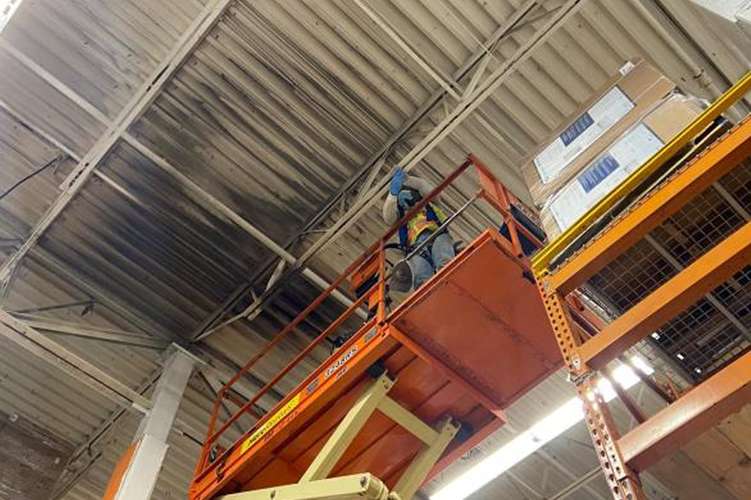
Cotton GDS commercial disaster solutions  team repairing fire damage in Nashville, TN

Commercial Fire Damage Restoration in Nashville, TN

Nashville's commercial fire damage risk spans a range of building types and uses that each present distinct assessment and restoration challenges. The Lower Broadway and Midtown entertainment corridor contains a dense concentration of hospitality and venue operations where shared HVAC systems and open floor plans allow smoke to move through a building's common spaces quickly after a fire event. The Brentwood and Cool Springs corridor anchors one of the most significant corporate headquarters concentrations in the South, including HCA Healthcare, and the professional services facilities there house operational equipment, business records and tenant operations that require systematic content recovery rather than standard office replacement. Nashville's industrial base along the I-24 and I-65 corridors adds a third profile, where manufacturing and distribution operations handle materials that produce chemical smoke compounds when a fire occurs.

Our Nashville, TN commercial fire damage restoration team evaluates the full scope of secondary damage across the entire affected footprint, coordinates directly with your insurance adjuster and manages every phase of recovery under a single engagement.

  • Soot & Smoke Cleanup: Systematic removal of soot residue and smoke deposits from all affected surfaces and building materials, including shared mechanical systems and adjacent spaces that had no direct fire contact.

  • Odor Removal & Deodorization: We treat smoke odor at the material level across the full affected footprint so the property is safe and fully habitable upon project completion.

  • Content Cleaning & Restoration: Professional cleaning and recovery of FF&E, fixtures and equipment to reduce replacement costs and shorten the overall restoration timeline.

  • Document & Data Recovery: Recovery of business-critical records and data using freeze-drying and professional cleaning to limit permanent loss wherever possible.

  • Reconstruction Services: Comprehensive restoration of structural integrity, including site containment, temporary shoring, full-scale carpentry and complete exterior envelope reconstruction, with our team managing the Metro Nashville permitting process throughout.

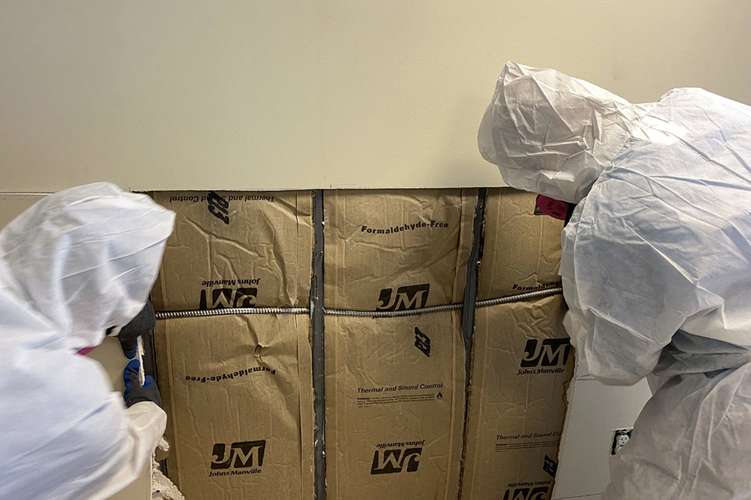
Cotton GDS commercial disaster solutions team removing mold damage in Nashville, TN

Commercial Mold Damage Restoration in Nashville, TN

Nashville sits firmly within the humid subtropical climate zone, and the city's position in a river valley surrounded by the Cumberland Plateau means moisture from Gulf and Atlantic systems moves through the metro regularly throughout spring and summer. Commercial buildings with limited ventilation, unresolved water intrusion or inadequate HVAC drainage are particularly vulnerable during the extended high-humidity periods that run from April through September. Mold can begin developing on wet commercial building materials within 24 to 48 hours of a moisture event, and Nashville's baseline humidity environment means that window closes faster in summer months than it would in a drier climate. The 2010 flood created a secondary mold exposure across Middle Tennessee that persisted for months afterward. Properties where water losses were not fully mitigated or where moisture mapping missed affected cavities developed mold growth inside wall assemblies and below finished surfaces long after the visible flooding had receded. Nashville's construction pace over the past decade has added a separate risk. Buildings closed in on compressed schedules sometimes enclosed materials before they had dried fully, creating baseline moisture conditions inside wall assemblies that accelerate mold development when any additional moisture enters.

Our Nashville, TN commercial mold damage restoration process begins with containment to prevent spore migration beyond the affected area. We remove mold-impacted materials, treat affected surfaces, restore indoor air quality to a measurable and verifiable level and provide complete project documentation at close. Nashville's commercial real estate market is one of the most active in the Southeast, and that documentation gives property owners and tenants a clear, defensible record for insurance claims, lease negotiations and future property transactions.

  • Mold Containment & Removal
  • Air Filtration & Scrubbing
  • Surface Treatment
  • Post-Remediation Verification

Commercial Storm Damage Restoration in Nashville, TN

On March 3, 2020, an EF3 tornado struck Nashville at 12:47 a.m. while most of the city was asleep. The tornado tracked directly through Germantown, East Nashville and the Donelson corridor, producing winds of 165 miles per hour and causing approximately $1.5 billion in damage across Davidson and Putnam counties. Commercial properties throughout the affected corridor sustained roof failures, structural damage and complete envelope loss within the same event, and the overnight timing meant that many facility managers did not know the full extent of damage to their properties until daylight. Cotton GDS was receiving calls before dawn and had teams on-site that same day.

Damage events in Middle Tennessee frequently require recovery across multiple service lines at once. A severe spring storm can produce tornado damage, wind damage, roof failure and interior flooding simultaneously, requiring coordinated recovery from a single point of contact. Beyond our core Nashville, TN commercial damage restoration services, we provide the following for commercial properties throughout Middle Tennessee and across the state:

ADDITIONAL COMMERCIAL DAMAGE RESTORATION SERVICES IN NASHVILLE

For many years, Cotton GDS has offered business owners and property managers peace of mind when it comes to restoration services, construction and roofing. With a local office in Nashville and a wide network of industry partners, Cotton GDS can quickly respond to your facility and begin the road to recovery with services that include:

The Cotton Difference for Nashville

Cotton GDS operates from a Nashville office on Hickory Hollow Parkway in Antioch that positions our team within reach of commercial properties throughout Davidson County and the surrounding Middle Tennessee region. Nashville's commercial sector includes the national headquarters of HCA Healthcare, Bridgestone Americas and Dollar General, major healthcare and university campuses anchored by Vanderbilt University Medical Center and TriStar Health, a hospitality and entertainment industry concentrated along Lower Broadway and the Opryland corridor and a rapidly expanding corporate and technology base in the Cool Springs and Brentwood market. When a loss event occurs at any of these properties, the operational and financial consequences extend well beyond the cost of the physical repairs.

24/7 Situational Awareness: Our Business Intelligence Center monitors severe weather systems tracking toward Middle Tennessee throughout the year, including the tornado outbreaks and severe thunderstorm events that affect the Nashville corridor with regularity, allowing us to pre-position equipment and personnel before conditions deteriorate.

Pre-Loaded Fleet for Immediate Dispatch: Equipment is staged and ready to deploy throughout Nashville and the surrounding Middle Tennessee region, reducing the time between the damage event and the start of active mitigation.

Trusted by Nashville Businesses: With nearly 30 years of commercial restoration experience, we have the track record and resources that facility managers and property owners across the greater Nashville metro can depend on when a loss occurs.

Adherence to OSHA Standards: We operate in full compliance with all local, state and federal regulations on every project, regardless of scope or complexity.

Commercial-Grade Equipment: We deploy industrial-scale extraction, drying and remediation equipment purpose-built for commercial facilities, not residential tools repurposed for a larger job.

Contact Cotton GDS for Nashville, TN commercial damage restoration and repair and put our experience to work for your property.

What Our Clients are Saying

“I contacted Cotton at 6 a.m., just hours after the tornado came through the area. My call was answered immediately and Cotton team members were arriving by early afternoon that day. Cotton has been a real partner in this recovery, advocating for the immediate needs of the property, keeping the recovery efforts pushing forward and enhancing our team’s ability to support our residents through a very challenging period."

- Nashville, TN, Commercial Property Manager

Cotton's Service Areas Near Nashville, Tennessee

  • Arlington
  • Athens
  • Bartlett
  • Brentwood
  • Bristol
  • Chattanooga
  • Clarksville
  • Cleveland
  • Collierville
  • Columbia
  • Cookeville
  • Crossville
  • Dickson
  • Dyersburg
  • East Ridge
  • Elizabethton
  • Farragut
  • Franklin
  • Gallatin
  • Germantown
  • Goodlettsville
  • Greeneville
  • Hendersonville
  • Hixson
  • Jackson
  • Johnson City
  • Kingsport
  • Knoxville
  • La Vergne
  • Lakeland
  • Lebanon
  • Lewisburg
  • Maryville
  • McMinnville
  • Memphis
  • Morristown
  • Mount Juliet
  • Murfreesboro
  • Nashville-Davidson
  • Oak Ridge
  • Portland
  • Red Bank
  • Sevierville
  • Shelbyville
  • Smyrna
  • Soddy Daisy
  • Spring Hill
  • Springfield
  • Tullahoma
  • White House

    Frequently Asked Questions About Commercial Damage Restoration in Nashville, TN

    How did the May 2010 Nashville flood affect commercial properties across the metro?

    The May 2010 flood remains the most significant commercial water loss event in Nashville's modern history. Two rounds of severe thunderstorms delivered more than 13 inches of rainfall across the metro in 48 hours, causing the Cumberland River to crest at 51.86 feet and inundating commercial properties throughout downtown Nashville, the Opryland resort and convention complex, the Donelson corridor and low-lying commercial areas across Davidson County. Properties throughout the region that had no prior flood history sustained significant losses because the volume of water overwhelmed the river system and spread well beyond the established floodplain. Total damage across the region exceeded $2 billion. The event established the baseline expectation for how we approach large-scale commercial flood response in this market, and the speed of that initial activation is what determined which properties received prompt mitigation and which waited.

    How does Cotton GDS respond to commercial storm damage restoration calls after a Nashville tornado event?

    After the March 2020 tornado, our first calls came in before daylight and our teams were on-site in the Germantown and East Nashville corridors that same morning. Our Business Intelligence Center monitors National Weather Service tornado watches and warnings across Middle Tennessee and activates pre-event logistics when a significant severe weather system approaches the Nashville corridor. That means equipment is pre-positioned and crews are on standby before a storm arrives rather than mobilizing after the fact. When a tornado impacts a commercial property, the initial response priorities are structural stabilization, emergency board-up to prevent further weather intrusion and a thorough structural assessment to identify any damage that is not visible from the exterior. We manage all three under a single engagement from the first call.

    What is the difference between commercial water mitigation and commercial water damage restoration in a Nashville facility?

    Commercial water mitigation is the emergency response phase. It covers water extraction, containment of the affected area and the initiation of drying to stop ongoing damage from spreading further into structural materials. Commercial water damage restoration is the broader scope that follows, including completion of structural drying, removal of materials that cannot be restored, content recovery and the physical return of the building and its systems to pre-loss condition. For large commercial facilities in Nashville, mitigation typically begins within hours of a loss event while full restoration planning runs concurrently. We manage both phases under a single engagement so facility managers have one point of contact from initial response through project close.

    How does Nashville's rapid commercial growth affect mold risk in newer office buildings?

    Nashville's construction pace over the past decade has produced office buildings, mixed-use developments and hospitality properties built and occupied on compressed schedules. In some cases, framing, drywall and insulation were enclosed before structural materials had dried to acceptable moisture content levels, creating baseline conditions inside wall assemblies that accelerate mold development significantly when any additional moisture enters. Newer buildings in Nashville are not automatically at lower mold risk than older ones, particularly in the first several years after construction. After any water intrusion event, whether from a storm, a pipe failure or HVAC drainage issues, a thorough moisture assessment is warranted regardless of the building's age.

    Does Cotton GDS serve commercial properties in Franklin, Brentwood and the Cool Springs corridor from the Nashville office?

    Yes. Our Nashville office at 5162 Hickory Hollow Parkway serves commercial properties throughout Davidson County and the surrounding counties, including the Williamson County markets of Franklin, Brentwood and Cool Springs where a significant concentration of corporate headquarters and professional services operations is located. HCA Healthcare, Bridgestone Americas and other major employers in that corridor are within our standard Nashville service area. For large-scale commercial losses requiring additional resources, we coordinate with Cotton GDS's national network to ensure response capacity matches the scope of the event.

    Does Cotton GDS coordinate directly with commercial insurance adjusters in Tennessee?

    Yes. We document conditions from the first day on-site, including moisture readings, photographs and material inventories, and we communicate directly with your adjuster throughout the project. Tennessee commercial property claims following tornado or flood events carry documentation requirements that differ significantly from standard single-cause water damage claims, particularly when a loss involves both wind damage and subsequent water intrusion under separate policy provisions. Our team is experienced with what Tennessee carriers and adjusters need to process those claims efficiently and without unnecessary delays.

    How long does Nashville, TN commercial damage restoration typically take?

    Timeline depends on the type of loss, the scope of the damage and how quickly mitigation began. A contained water loss in a single commercial space can typically be dried and restored within two to three weeks from the start of extraction. A tornado loss involving structural damage, roof failure and interior flooding across a large commercial facility will extend that timeline considerably, often to several months when structural reconstruction and Metro Nashville permitting are included in the scope. A flood loss with extended water exposure and secondary mold development adds a remediation phase before reconstruction can begin. We provide a project-specific timeline at the outset of every engagement so facility managers can plan accordingly.

    CONTACT US TO GET STARTED