Commercial Damage Restoration In Atlanta, Georgia
Commercial Water, Fire and Mold Damage Restoration in Atlanta, Georgia
- Office Location: 800 Atlanta South Parkway #200, Atlanta, GA 30349
- Contact: 877.900.0493
- Location: 40 minutes from Mercedes-Benz Stadium, 48 minutes from Hartsfield-Jackson International Airport and 50 minutes from Six Flags Over Georgia
Cotton Global Disaster Solutions has been responding to commercial property damage events since 1996. We serve Atlanta businesses around the clock, providing Atlanta, GA commercial damage restoration and repair services for water, fire, mold and storm losses across the greater Atlanta metro. From corporate campuses in Midtown and Buckhead to healthcare facilities throughout the region and logistics and manufacturing operations along the I-20 and I-85 corridors, our team is available 24/7 with commercial-scale equipment and the coordination needed to limit your downtime and return your property to pre-loss condition. With state-of-the-art technology and turnkey restoration solutions, you can rest assured your Atlanta facility will receive professional service whenever you need it.
Commercial Water Damage Restoration in Atlanta, GA
Atlanta's commercial water damage risk is shaped by a geography that amplifies rainfall in ways that are not fully apparent until a significant storm event arrives. The city sits within a watershed that drains toward multiple creek systems running through developed commercial corridors, and three decades of rapid metro expansion have dramatically increased impervious surface cover across the basin, reducing the ground's capacity to absorb rainfall during intense storm events. September 2009 is the benchmark event for the Atlanta commercial market. A slow-moving storm system stalled over northern Georgia and delivered more than 18 inches of rainfall in some areas over four days, causing catastrophic flooding across the metro. Peachtree Creek, Sweetwater Creek and their tributaries inundated commercial properties well beyond the visible floodplain, affecting businesses with no prior flood history that had not carried flood coverage. Losses across the Atlanta metro exceeded $500 million and demonstrated that commercial properties throughout the basin carry a flood exposure that standard risk models had historically underestimated. Beyond major storm events, Atlanta's commercial water damage profile includes a winter dimension that is consistently underestimated. The city experiences ice storms with enough frequency that commercial buildings across the metro sustain pipe failures in above-ceiling mechanical spaces and exterior wall assemblies when sustained freezing temperatures arrive, particularly in facilities that were not designed or insulated for extended cold.
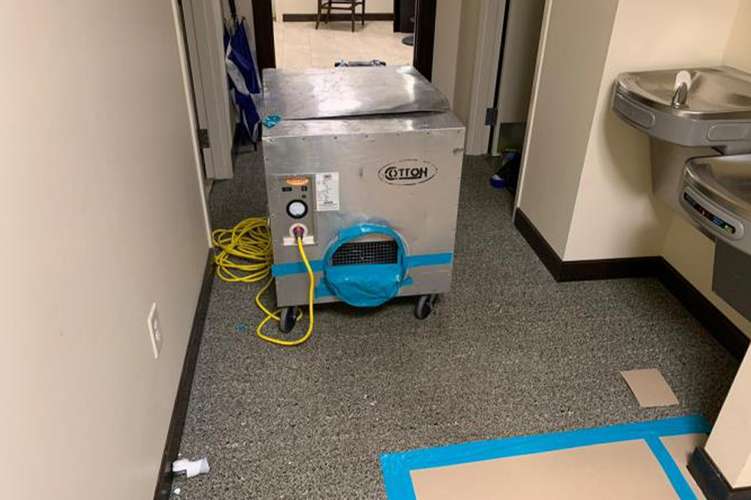
When we respond to an Atlanta, GA commercial water damage restoration or commercial water mitigation call, we extract standing water, map moisture throughout the structure using calibrated instruments and begin active drying with industrial equipment immediately. We document every condition throughout the process to support your insurance claim and deliver a full moisture log at project close.
Water Extraction: Rapid removal of standing water to stop damage from spreading into structural materials.
Drying & Dehumidification: Industrial drying equipment calibrated for the moisture load and building type.
Content & Document Drying: Recovery of furnishings, equipment and business-critical records.
Moisture Mapping: Comprehensive assessment to confirm all affected areas are identified and fully dried before restoration closes out.
Commercial Fire Damage Restoration in Atlanta, GA
Atlanta's Midtown corridor has become one of the most concentrated high-rise commercial office and mixed-use developments in the Southeast, and fire events in that building inventory produce a secondary damage profile that extends well beyond the floor of origin. Smoke and soot travel through shared HVAC systems, elevator shafts and stairwells into occupied areas throughout the building quickly, and the scale of that migration in a 30- or 40-story tower can involve multiple tenant floors that had no direct fire contact. The Buckhead financial district adds a second high-rise context with a similar exposure profile. Atlanta's I-20 and I-85 corridors anchor one of the largest logistics and distribution concentrations in the Southeast, and the manufacturing and warehousing operations along those corridors handle materials and processes that produce chemical smoke compounds when a fire occurs, requiring specialized assessment protocols beyond what a standard commercial office fire demands.
Our Atlanta, GA, commercial fire damage restoration team evaluates the full scope of secondary damage across the entire affected footprint, coordinates directly with your insurance adjuster and manages every phase of recovery under a single engagement.
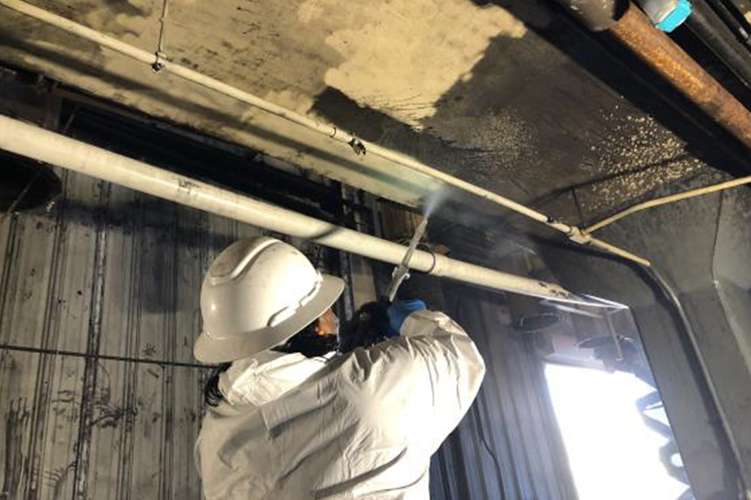
Soot & Smoke Cleanup: Systematic removal of soot residue and smoke deposits from all affected surfaces and building materials, including shared mechanical systems and occupied floors with no direct fire contact.
Odor Removal & Deodorization: We treat smoke odor at the material level across the full affected footprint so the property is safe and fully habitable upon project completion.
Content Cleaning & Restoration: Professional cleaning and recovery of FF&E, fixtures and equipment to reduce replacement costs and shorten the overall restoration timeline.
Document & Data Recovery: Recovery of business-critical records and data using freeze-drying and professional cleaning to limit permanent loss wherever possible.
Reconstruction Services: Comprehensive restoration of structural integrity, including site containment, temporary shoring, full-scale carpentry and complete exterior envelope reconstruction, with our team managing the City of Atlanta and Fulton County permitting process throughout.
Commercial Mold Damage Restoration in Atlanta, GA
Atlanta's humid subtropical climate sustains elevated relative humidity through spring, summer and into fall, and the city's position at the foothills of the Appalachians means moisture from Gulf and Atlantic systems moves through the metro regularly. In commercial buildings with limited ventilation, inadequate HVAC drainage or any unresolved water intrusion, mold can begin developing within 24 to 48 hours of a moisture event. The 2009 flood event created a secondary mold exposure that persisted across the Atlanta metro for months afterward. Properties where water losses were not fully mitigated or where moisture mapping missed affected cavities developed mold growth inside wall assemblies and below finished surfaces well after the visible flooding had receded. Atlanta's sustained commercial construction pace has added a separate risk factor. Buildings enclosed before framing and structural materials had dried fully carry baseline moisture conditions inside wall assemblies that accelerate mold development when any additional moisture enters.
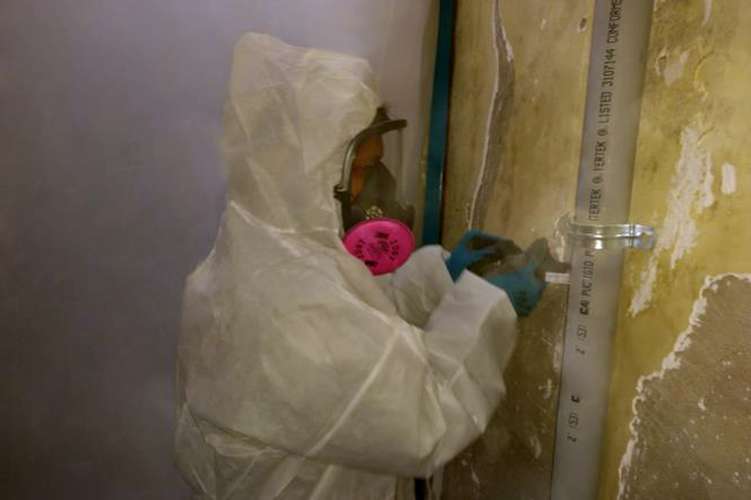
Our Atlanta, GA commercial mold damage restoration process begins with containment to prevent spore migration beyond the affected area. We remove mold-impacted materials, treat affected surfaces, restore indoor air quality to a measurable and verifiable level and provide complete project documentation at close. Atlanta's commercial real estate market is one of the largest and most active in the Southeast, and that documentation gives property owners and tenants a clear, defensible record for insurance claims, lease negotiations and future property transactions.
- Mold Containment & Removal
- Air Filtration & Scrubbing
- Surface Treatment
- Post-Remediation Verification
Additional Commercial Damage Services in Atlanta, GA
Damage events in the Atlanta metro frequently require recovery across more than one service line. A severe spring thunderstorm can produce wind damage, roof failure and interior flooding simultaneously, while a fire loss in a Midtown high-rise may require simultaneous smoke remediation, content recovery and structural reconstruction across multiple floors. Beyond our core Atlanta, GA commercial damage restoration services, we provide the following for commercial properties throughout the greater Atlanta region and across Georgia:
The Cotton Difference for Atlanta
Cotton GDS operates from an Atlanta office on Atlanta South Parkway that positions our team within reach of commercial properties throughout the metro and across the broader Georgia market. Atlanta's commercial sector includes one of the busiest airports in the world at Hartsfield-Jackson, the headquarters operations of major Fortune 500 companies in Buckhead and Midtown, the Emory Healthcare and Piedmont Health systems, a major logistics and distribution base along the I-20 and I-85 corridors and a growing technology and film production industry base across the metro. These are properties where a slow or disorganized restoration response carries operational and financial consequences that extend well beyond the cost of the physical repairs.
24/7 Situational Awareness: Our Business Intelligence Center monitors severe weather systems tracking toward the Georgia region throughout the year, including the slow-moving storm systems that have historically produced the most damaging commercial flooding events in the Atlanta metro, allowing us to pre-position equipment and personnel before conditions deteriorate.
Pre-Loaded Fleet for Immediate Dispatch: Equipment is staged and ready to deploy throughout Atlanta and the surrounding Georgia region, reducing the time between the damage event and the start of active mitigation.
Trusted by Atlanta Businesses: With nearly 30 years of commercial restoration experience, we have the track record and resources that facility managers and property owners across the greater Atlanta metro can depend on when a loss occurs.
Adherence to OSHA Standards: We operate in full compliance with all local, state and federal regulations on every project, regardless of scope or complexity.
Commercial-Grade Equipment: We deploy industrial-scale extraction, drying and remediation equipment purpose-built for commercial facilities, not residential tools repurposed for a larger job.
Contact Cotton GDS for Atlanta, GA commercial damage restoration and repair and put our experience to work for your property.
Cotton's Service Areas Near Atlanta, Georgia
- Acworth
- Albany
- Alpharetta
- Athens-Clarke County
- Atlanta
- Augusta-Richmond County
- Brookhaven
- Candler-McAfee
- Canton
- Carrollton
- Chamblee
- Columbus
- Dalton
- Decatur
- Douglasville
- Duluth
- Dunwoody
- East Point
- Evans
- Gainesville
- Hinesville
- Johns Creek
- Kennesaw
- LaGrange
- Lawrenceville
- Mableton
- Macon-Bibb County
- Marietta
- Martinez
- McDonough
- Milton
- Newnan
- Peachtree City
- Peachtree Corners
- Pooler
- Redan
- Rome
- Roswell
- Sandy Springs
- Savannah
- Smyrna
- South Fulton
- Statesboro
- Stockbridge
- Stonecrest
- Sugar Hill
- Tucker
- Valdosta
- Warner Robins
- Woodstock
Frequently Asked Questions About Commercial Damage Restoration in Atlanta, GA
How does Atlanta's impervious surface growth affect commercial flood risk for properties not near a creek?
As the Atlanta metro has expanded, parking lots, rooftops, roads and developed land have replaced the natural ground cover that previously absorbed rainfall. When a heavy thunderstorm delivers significant rainfall quickly, that water moves across impervious surfaces at high velocity and concentrates in low points and drainage corridors rather than soaking into the ground. Commercial properties in low-lying areas or at the base of slopes can receive a volume of stormwater runoff during an intense event that far exceeds what the building's location would have received when surrounding land was less developed. This is why commercial properties that have never experienced flooding before can sustain significant water intrusion during storms that do not register as major weather events in the local forecast.
How does commercial water mitigation differ from commercial water damage restoration in an Atlanta facility?
Commercial water mitigation is the emergency response phase. It covers water extraction, containment of the affected area and the initiation of drying to stop ongoing damage from spreading further into structural materials. Commercial water damage restoration is the broader scope that follows mitigation, including completion of structural drying, removal of materials that cannot be dried and restored, content recovery and the physical return of the building and its systems to pre-loss condition. For large commercial facilities in Atlanta, mitigation typically begins within hours of a loss event while full restoration planning runs concurrently. We manage both phases under a single engagement so facility managers have one point of contact from initial response through project close.
Why does commercial fire damage restoration in Atlanta's Midtown high-rises require a different assessment approach than low-rise commercial buildings?
In a high-rise commercial building, smoke and soot do not stay on the floor where a fire originates. The building's mechanical systems, stairwells and elevator shafts create vertical pathways that move smoke through the structure quickly. Pressurization systems designed to keep stairwells clear during evacuation can actually push smoke laterally into occupied floors above and below the fire. The result is that a fire on floor 12 of a Midtown office tower may deposit smoke residue on floors 8 through 20, requiring systematic assessment and remediation across a footprint that covers multiple tenant spaces and common areas. Standard low-rise fire restoration protocols that focus on the area of direct fire contact are not sufficient for this environment.
Does Atlanta's position in the Southeast create exposure to tropical storm flooding even without a direct Gulf Coast landfall?
Yes. Tropical systems that make landfall along the Gulf Coast or Florida's west coast frequently track northeast and deliver heavy rainfall well inland before they dissipate. Atlanta is far enough inland that wind damage from those systems is typically limited, but the moisture they carry can produce significant rainfall across the metro as the storm weakens. The combination of tropical moisture and Atlanta's impervious surface cover means that a weakening tropical system can generate commercial water losses across the Atlanta metro comparable to what a direct thunderstorm event would produce. We monitor tropical systems throughout hurricane season and assess their inland track projections as part of our pre-event planning process.
Does Cotton GDS serve commercial properties in Marietta, Alpharetta and the suburban Atlanta markets from the Atlanta office?
Yes. Our Atlanta office serves commercial properties throughout the greater metro, including Marietta, Alpharetta, Dunwoody, Decatur, Johns Creek, Kennesaw and the communities extending in every direction from the city. For large-scale commercial losses in the suburban markets that require additional resources, we coordinate with Cotton GDS's national network to ensure response capacity matches the scope of the event. The I-285 perimeter corridor and the commercial density along the GA-400 and I-75 corridors north of the city are part of our standard Atlanta service area.
Does Cotton GDS coordinate directly with commercial insurance adjusters in Georgia?
Yes. We document conditions from the first day on-site, including moisture readings, photographs and material inventories, and we communicate directly with your adjuster throughout the project. Georgia commercial property claims, particularly those involving storm surge, flash flooding or multi-cause losses, carry documentation requirements that differ from standard single-cause water damage claims. Our team is experienced with what Georgia carriers and adjusters need to process those claims efficiently and without unnecessary delays.
How long does Atlanta, GA commercial damage restoration typically take?
Timeline depends on the type of loss, the scope of the damage and how quickly mitigation began. A contained water loss in a single commercial space can typically be dried and restored within two to three weeks from the start of extraction. A fire loss in a Midtown high-rise involving smoke migration across multiple floors will extend that timeline considerably, often to several months when structural reconstruction and City of Atlanta permitting are included in the scope. A flood loss involving extended water exposure and secondary mold development, as many properties experienced following the 2009 event, can also require a longer timeline when remediation and structural drying are compounded. We provide a project-specific assessment at the outset of every engagement so facility managers can plan accordingly.