Commercial Disaster Restoration Services Charlotte, NC

Commercial Damage Restoration and Repair in Charlotte, NC

Commercial Water, Fire and Mold Damage Restoration in Charlotte, North Carolina

    • Unknown.jpeg
    • Office Location: 3201 International Airport Dr, Suite 600, Charlotte, NC 28208
    • Contact: 877.900.0493
    • Location: 7 minutes from Charlotte Douglas International Airport, 12 minutes from Spectrum Center and 15 minutes from the NASCAR Hall of Fame

    Cotton Global Disaster Solutions has been responding to commercial property damage events since 1996. We serve Charlotte businesses around the clock, providing Charlotte, NC commercial damage restoration and repair services for water, fire, mold and storm losses across the greater Charlotte region. From financial services campuses in Uptown and SouthPark to healthcare facilities throughout the Carolinas Medical corridor and manufacturing operations along the I-85 corridor, our team is available 24/7 with commercial-scale equipment and the coordination needed to limit your downtime and return your property to pre-loss condition. With state-of-the-art technology and turnkey restoration solutions, you can rest assured your Charlotte facility will receive professional service whenever you need it.

    Commercial Water Damage Restoration in Charlotte, NC

    Commercial Water Damage Restoration in Charlotte, NC

    Charlotte's commercial water damage risk comes from two directions that operate on different timelines, and both have produced significant losses for businesses across the city. The first is ice. Charlotte occupies a geographic position where winter precipitation frequently falls as freezing rain rather than snow, coating pipes, roofing systems and building envelopes in ice that persists for days. Commercial buildings in the greater Charlotte area are not designed for the sustained pipe stress that a multi-day ice event creates, and the resulting failures in above-ceiling mechanical spaces and exterior wall assemblies can spread undetected through a building for hours before reaching a visible surface. The January 2022 ice storm that paralyzed Charlotte for several days is the most recent large-scale example, but ice-driven commercial water losses occur in this market with enough regularity that every facility manager in Mecklenburg County should have a response plan in place before winter arrives. The second risk is Charlotte's flash flood exposure. The city's rapid growth over the past two decades has dramatically increased impervious surface cover across the watershed, reducing the ground's ability to absorb rainfall during intense summer thunderstorm events. Irwin Creek, Little Sugar Creek and their tributaries run through commercial corridors in Uptown and South End, and those corridors have experienced recurring flash flood damage as the volume of stormwater the system is asked to manage has grown faster than the drainage infrastructure supporting it.

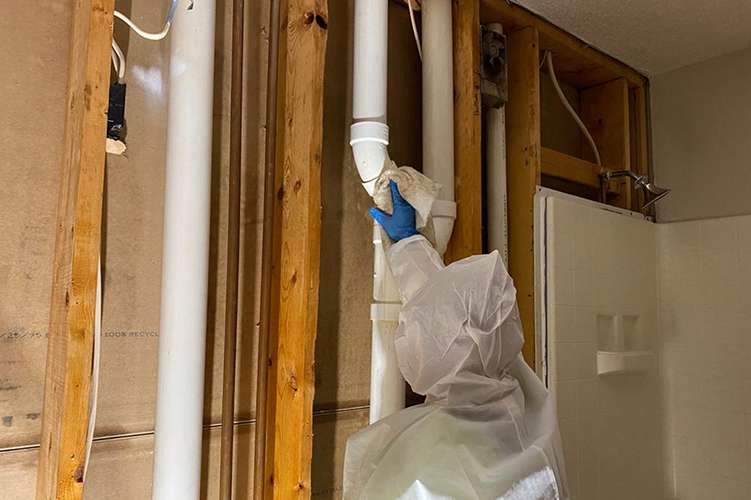
    When we respond to a Charlotte, NC commercial water damage restoration or commercial water mitigation call, we extract standing water, map moisture throughout the structure using calibrated instruments and begin active drying with industrial equipment immediately. We document every condition throughout the process to support your insurance claim and deliver a full moisture log at project close.

    • Water Extraction: Rapid removal of standing water to stop damage from spreading into structural materials.
    • Drying & Dehumidification: Industrial drying equipment calibrated for the moisture load and building type.

    • Content & Document Drying: Recovery of furnishings, equipment and business-critical records.

    • Moisture Mapping: Comprehensive assessment to confirm all affected areas are identified and fully dried before restoration closes out.

    Commercial Mold Removal in Charlotte, NC

    Commercial Mold Removal in Charlotte, NC

    Charlotte's humid subtropical climate sustains elevated relative humidity through most of the spring, summer and early fall, and commercial buildings throughout Mecklenburg County carry a baseline moisture environment that accelerates mold development when any water intrusion occurs. Charlotte's pace of commercial construction over the past decade has added a secondary exposure risk. Properties built and occupied on compressed schedules sometimes enclosed building materials before they dried fully, leaving baseline moisture conditions inside wall assemblies that support mold development faster than an older, well-dried structure would. After any water intrusion event, whether from a pipe failure, an ice storm or a flash flooding event, mold can begin developing on wet commercial building materials within 24 to 48 hours. Properties where commercial water mitigation was incomplete or where moisture mapping missed affected cavities are particularly vulnerable to secondary mold growth in the weeks that follow.

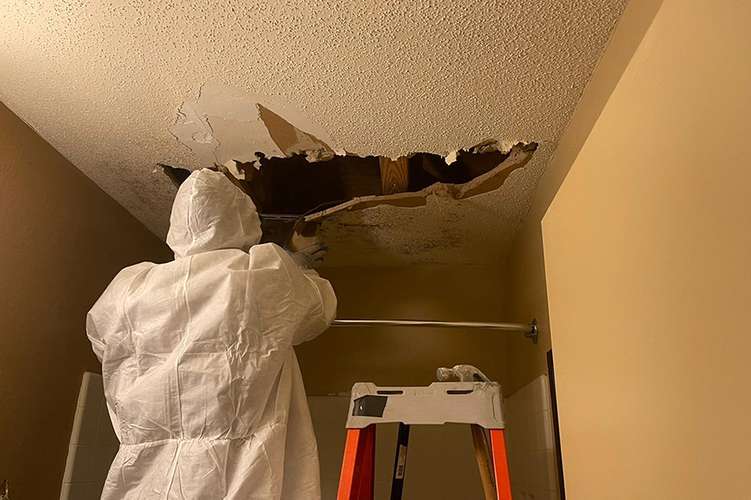
    Our Charlotte, NC commercial mold damage restoration process begins with containment to prevent spore migration beyond the affected area. We remove mold-impacted materials, treat affected surfaces, restore indoor air quality to a measurable and verifiable level and provide complete project documentation at close. Charlotte's commercial real estate market is one of the fastest-growing in the Southeast, and that documentation gives property owners and tenants a clear, defensible record for insurance claims, lease negotiations and future property transactions.

    • Mold Containment & Removal
    • Air Filtration & Scrubbing
    • Surface Treatment
    • Post-Remediation Verification
    Commercial Fire Damage Restoration in Charlotte, NC

    Commercial Fire Damage Restoration in Charlotte, NC

    Uptown Charlotte has become one of the most concentrated high-rise commercial corridors in the Southeast, anchored by the headquarters operations of Bank of America, Truist Financial and Duke Energy alongside major healthcare campuses and a dense hospitality and retail base. In a high-rise commercial environment, smoke and soot from a fire on one floor travel through shared HVAC systems, elevator shafts and stairwells into occupied areas throughout the building quickly, creating a secondary damage footprint that can extend well beyond the floor of origin. Charlotte's second fire risk profile sits along the I-85 corridor and in the North Charlotte industrial district, where manufacturing facilities, distribution centers and logistics operations handle equipment, materials and processes that produce chemical smoke compounds when a fire occurs, requiring specialized assessment rather than a standard commercial office fire protocol.

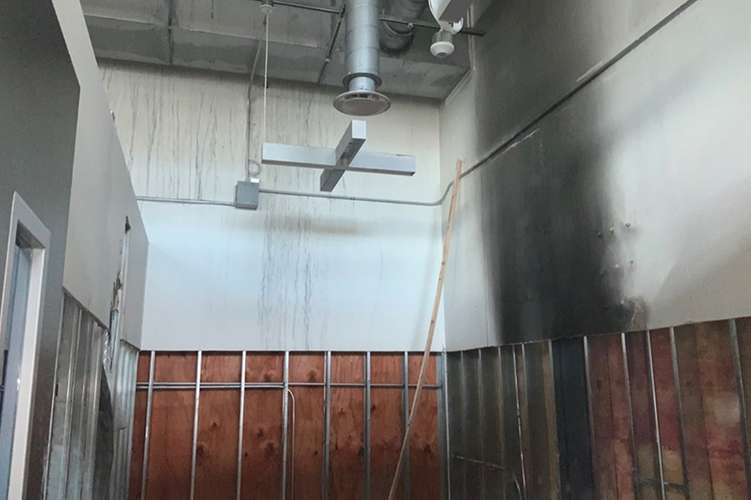
    Our Charlotte, NC commercial fire damage restoration team evaluates the full scope of secondary damage across the entire affected footprint, coordinates directly with your insurance adjuster and manages every phase of recovery under a single engagement.

    • Soot & Smoke Cleanup: Systematic removal of soot residue and smoke deposits from all affected surfaces and building materials, including shared mechanical systems and occupied floors that had no direct fire contact in Uptown high-rise properties.

    • Odor Removal & Deodorization: We treat smoke odor at the material level across the full affected footprint so the property is safe and fully habitable upon project completion.

    • Content Cleaning & Restoration: Professional cleaning and recovery of FF&E, fixtures and equipment to reduce replacement costs and shorten the overall restoration timeline. For Charlotte's financial services and professional services facilities, content recovery rather than replacement can have a direct impact on the total cost of the loss.

    • Document & Data Recovery: Recovery of business-critical records and data using freeze-drying and professional cleaning to limit permanent loss wherever possible.

    • Reconstruction Services: Comprehensive restoration of structural integrity, including site containment, temporary shoring, full-scale carpentry and complete exterior envelope reconstruction. Our team maintains established relationships with Charlotte-area permitting authorities to keep the reconstruction phase on track through the City of Charlotte and Mecklenburg County review process.

    Additional Commercial Damage Services in Charlotte, NC

    Charlotte's severe weather profile means a single storm event can produce wind damage, roof failure and interior flooding simultaneously, requiring coordinated recovery across multiple service lines from a single point of contact. Beyond our core Charlotte, NC commercial damage restoration services, we provide the following for commercial properties throughout the greater Charlotte region and across the Carolinas:

    The Cotton Difference for Charlotte

    Cotton GDS operates from a Charlotte office on International Airport Drive that positions our team within reach of commercial properties throughout Mecklenburg County and the surrounding region. Charlotte's commercial sector includes one of the largest banking and financial services concentrations in the United States, the Atrium Health and Novant Health systems, Duke Energy's national headquarters, a major logistics and distribution base along the I-85 and I-77 corridors and a rapidly expanding South End and Midtown technology corridor. These are properties where a slow or disorganized restoration response carries operational and financial consequences that extend well beyond the cost of the physical repairs.

    24/7 Situational Awareness: Our Business Intelligence Center monitors severe weather systems tracking toward the Carolinas throughout the year, including the ice storms that affect Charlotte with regularity and the tropical systems that bring heavy rainfall inland from the coast, allowing us to pre-position equipment and personnel before conditions deteriorate.

    Pre-Loaded Fleet for Immediate Dispatch: Equipment is staged and ready to deploy throughout Charlotte, Mecklenburg County and the surrounding North Carolina region, reducing the time between the damage event and the start of active mitigation.

    Trusted by Charlotte Businesses: With nearly 30 years of commercial restoration experience, we have the track record and resources that facility managers and property owners across the greater Charlotte metro can depend on when a loss occurs.

    Adherence to OSHA Standards: We operate in full compliance with all local, state and federal regulations on every project, regardless of scope or complexity.

    Commercial-Grade Equipment: We deploy industrial-scale extraction, drying and remediation equipment purpose-built for commercial facilities, not residential tools repurposed for a larger job.

    Contact Cotton GDS for Charlotte, NC commercial damage restoration and repair and put our experience to work for your property.

    COTTON’S SERVICE AREAS NEAR CHARLOTTE:

          • Apex

          • Asheboro

          • Asheville

          • Boone

          • Burlington

          • Carrboro

          • Cary

          • Chapel Hill

          • Charlotte

          • Clayton

          • Clemmons

          • Concord

          • Cornelius

          • Durham

          • Fayetteville

          • Fuquay-Varina

          • Garner

          • Gastonia

          • Goldsboro

          • Greensboro

          • Greenville

          • Havelock

          • Hickory

          • High Point

          • Holly Springs

          • Huntersville

          • Indian Trail

          • Jacksonville

          • Kannapolis

          • Kernersville

          • Kinston

          • Leland

          • Lumberton

          • Matthews

          • Mint Hill

          • Monroe

          • Mooresville

          • Morrisville

          • New Bern

          • Raleigh

          • Rocky Mount

          • Salisbury

          • Sanford

          • Shelby

          • Statesville

          • Thomasville

          • Wake Forest

          • Wilmington

          • Wilson

          • Winston-Salem

    Frequently Asked Questions About Commercial Damage Restoration in Charlotte, NC

    Why does ice cause so much commercial water damage in Charlotte compared to snowstorm markets?

    Charlotte's geographic position puts it in a precipitation zone where winter storms frequently produce freezing rain rather than snow. Freezing rain coats exposed pipe sections, rooftop mechanical equipment and building envelope components in ice that can persist for days at a time. Unlike heavy snowfall, which is visible and prompts an immediate response, ice accumulation inside wall assemblies and above-ceiling spaces is not visible until a pipe has already failed and water has begun moving through the structure. Commercial buildings in Charlotte were not designed or insulated for the sustained freeze cycles that a multi-day ice event creates, which is why ice storms consistently produce a high volume of commercial water losses in this market.

    How does Charlotte's commercial growth affect mold risk in newer office buildings?

    Charlotte has been one of the fastest-growing commercial real estate markets in the Southeast for the past decade, and that growth has come with construction timelines that are tightly compressed. In some cases, exterior cladding, drywall and insulation were installed before framing and structural materials had dried to acceptable moisture content levels. That creates a baseline condition inside the wall assembly that accelerates mold development significantly when any additional moisture enters the building. Newer buildings in Charlotte are not automatically safer from a mold standpoint than older ones, and a thorough moisture assessment is warranted after any water intrusion event regardless of how recently the building was constructed.

    How does smoke travel through a high-rise commercial building in Uptown Charlotte during a fire event?

    High-rise commercial buildings share HVAC systems, elevator shafts and stairwells that function as pathways for smoke and soot to move vertically through the structure after a fire on any floor. The positive pressure created by the building's mechanical systems can push smoke into floors above and below the fire's point of origin before suppression systems have fully controlled the event. In Charlotte's Uptown corridor, where a single tower may house multiple commercial tenants across dozens of floors, this means the secondary damage footprint from a single-floor fire can be extensive. A thorough assessment of smoke penetration above and below the fire floor is a required first step in every high-rise commercial fire restoration engagement we handle.

    Does Cotton GDS serve the Concord and Kannapolis markets from the Charlotte office?

    Yes. Our Charlotte office on International Airport Drive serves commercial properties throughout Mecklenburg County and into Cabarrus County, including Concord, Kannapolis and the communities along the I-85 corridor. The NASCAR Research and Development Center, Concord Mills and the motorsports industry facilities in that corridor are part of our standard service area. For large-scale commercial losses requiring additional resources, we coordinate with Cotton GDS's national network to ensure response capacity matches the scope of the event.

    What is commercial water mitigation and how is it different from water damage restoration?

    Commercial water mitigation refers specifically to the emergency response phase of a water loss, which includes water extraction, containment of the affected area and initiation of drying to stop ongoing damage from spreading further into structural materials. Commercial water damage restoration is the broader scope that follows, including structural drying completion, material removal where necessary, content recovery and the physical restoration of the building and its systems to pre-loss condition. For large commercial properties in Charlotte, mitigation often begins within hours of a loss event while full restoration planning runs in parallel. We handle both phases under a single engagement so facility managers have one point of contact from initial response through project close.

    Does Charlotte's position in the Carolinas create exposure to tropical storm flooding even without a direct hurricane strike?

    Yes. Tropical systems that make landfall along the South Carolina or Georgia coast can deliver significant rainfall into Mecklenburg County as they weaken and track inland. The remnants of Hurricane Florence in 2018 brought heavy rainfall well inland across the Carolinas, and other tropical systems have produced similar secondary flooding in Charlotte-area commercial corridors without making direct landfall anywhere near the city. The flash flood risk from tropical moisture is compounded by Charlotte's expanding impervious surface cover, which reduces the ground's capacity to absorb heavy rainfall and increases the volume of stormwater moving through the city's creek system during any significant rain event.

    Does Cotton GDS coordinate directly with commercial insurance adjusters in North Carolina?

    Yes. We document conditions from the first day on-site, including moisture readings, photographs and material inventories, and we communicate directly with your adjuster throughout the project. North Carolina commercial property claims, particularly those involving ice storm pipe failures or multi-cause storm losses, carry documentation requirements that differ from standard single-cause water damage claims. Our team is experienced with what North Carolina carriers and adjusters need to process those claims efficiently and without unnecessary delays.

    How long does Charlotte, NC commercial damage restoration typically take?

    Timeline depends on the type of loss, the scope of the damage and how quickly mitigation began. A contained water loss in a single commercial space can typically be dried and restored within two to three weeks from the start of extraction. A fire loss in an Uptown high-rise involving smoke migration across multiple floors will extend that timeline considerably, often to several months when structural reconstruction and City of Charlotte permitting are included in the scope. An ice storm pipe failure that spread undetected through a building overnight before it was discovered can also produce a longer mitigation timeline because moisture penetration into structural materials is often deeper than it first appears. We provide a project-specific assessment at the outset of every engagement so facility managers can plan accordingly.

    CONTACT US TO GET STARTED